
Introduction
The project successfully implemented waste management strategies to address climate change by integrating advanced technological approaches within affected communities. Key activities included the establishment of recycling initiatives, community education programs on climate change, and the community to be equipped with knowledge of sustainable waste practices. Utilizing the 3R (Reduce, Reuse, Recycle) concept, non-perishable waste was systematically segregated to maximize resource recovery and minimize environmental impact. Additionally, digital platforms and social media platforms were used to leverage and disseminate technical knowledge, ensuring widespread awareness and adoption of sustainable practices. As a result, the project has enhanced community engagement, improved waste management efficiency, and contributed to long-term environmental sustainability.
Action
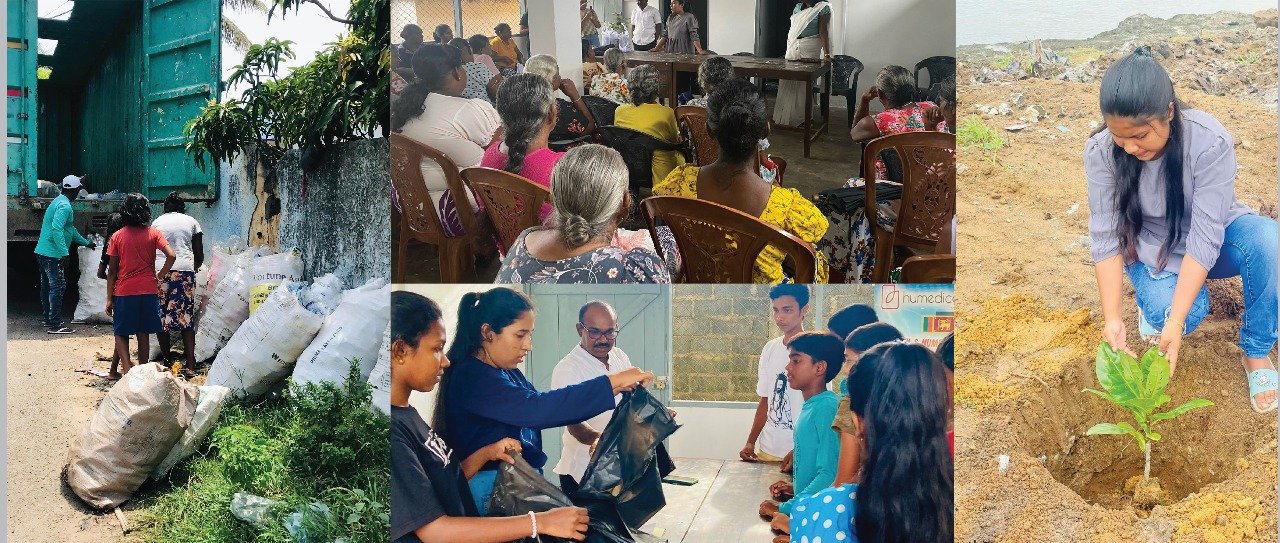
They were involved in implementing waste management strategies to address climate change by integrating advanced technological approaches within affected communities. Key activities included the establishment of recycling initiatives. They held community education programs on climate change. Utilizing the 3R (Reduce, Reuse, Recycle) concept, non-perishable waste was systematically segregated to maximize resource recovery and minimize environmental impact. Additionally, digital and social media platforms were used to leverage and disseminate technical knowledge, ensuring widespread awareness and adoption of sustainable practices.
They held the tree planting program with Devnuwara port and people
who live in 443/G welegoda Gramasewa division
Project Objective
• Recycling of waste.
• Educating the community about climate change.
• Creating a Green Skilled Community.
• Use the 3R concept of non-perishable segregation
Impact and Results
As a result, the project has enhanced community engagement, improved waste management efficiency, and contributed to long-term environmental sustainability


