
Introduction
The Green Bloom project aims to address climate change by creating a sustainable classroom that provides students with the knowledge and skills necessary to understand, mitigate, and adapt to climate change. By integrating hands-on learning with practical sustainable practices, the project fosters climate-conscious individuals who can extend their knowledge to their families and communities, creating a ripple effect of climate action.
Action
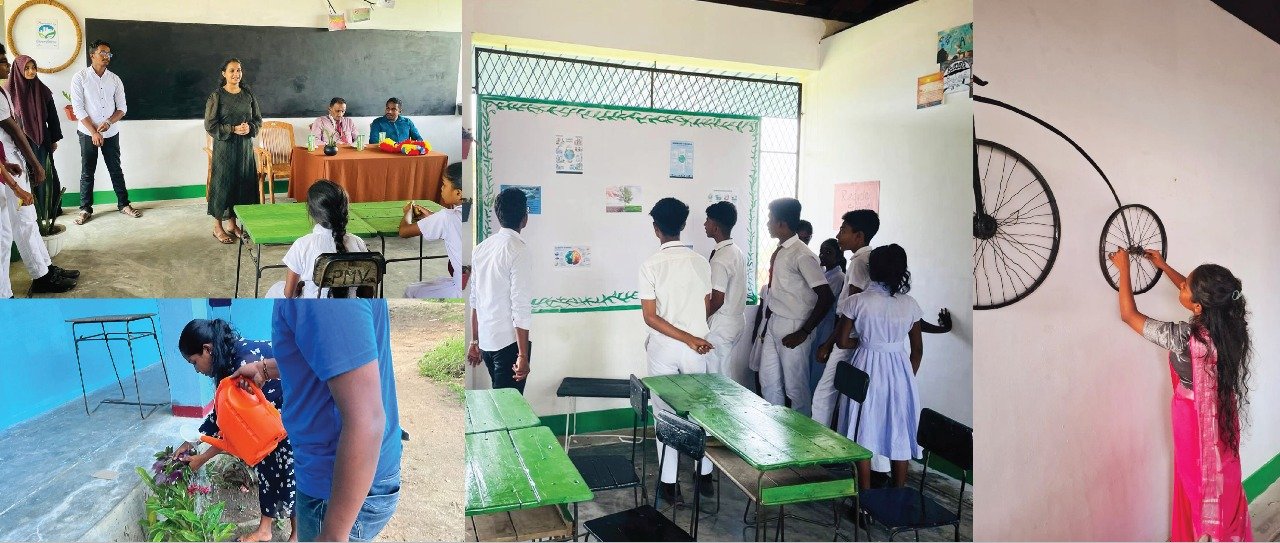
The Climate Change Awareness Programme engaged students through interactive presentations, visual aids, and climate games to simplify complex concepts and encourage practical action. Hands-on training transformed the agricultural room into a sustainable classroom, where students practiced composting, water conservation, and organic farming, taking ownership of maintenance. Community involvement was strengthened through partnerships with the Central Environmental Authority and school environmental clubs, ensuring long-term impact. Students were also empowered to replicate sustainable practices at home. The initiative culminated in a Showcasing Event, unveiling the Green Bloom project’s achievements and demonstrating the power of
collective climate action.
Project Objective
• Increase Climate Change Awareness: Equip students with
fundamental knowledge about climate change, including its causes,
effects, and the importance of both mitigation and adaptation
strategies. The aim is to inspire students to become advocates for
climate action within their communities.
• Empower Students to Practice Sustainability: Provide students with practical, hands-on training that enables them to implement
sustainable practices in their daily lives. Through the transformation
of a classroom into a sustainable classroom, students gain direct
experience with eco-friendly techniques that they can replicate at
home and in the wider community.
Impact and Results
The Green Bloom Project has had a lasting impact by increasing climate change awareness, fostering hands-on sustainability practices, and encouraging student-led initiatives. Students demonstrated a deeper understanding of climate issues and a stronger commitment to action. Twenty students actively maintained the sustainable classroom, gaining practical experience in composting, organic farming, and water conservation, with all participants acquiring knowledge to apply at home. The project’s success extended to families, promoting home gardening and waste reduction. Moving forward, student leaders will oversee sustainability efforts through mentorship, while community outreach programs will expand the initiative to neighboring schools,
ensuring continued growth and replication.


